TL;DR: On June 12, 2026, the US government banned foreign users from accessing Anthropic's AI models, Claude Fable 5 and Mythos 5, over security concerns. After Anthropic improved its safety systems and agreed to work more closely with the government, the Anthropic AI Export Ban was lifted on June 30, 2026. Global access was restored on July 1, 2026.
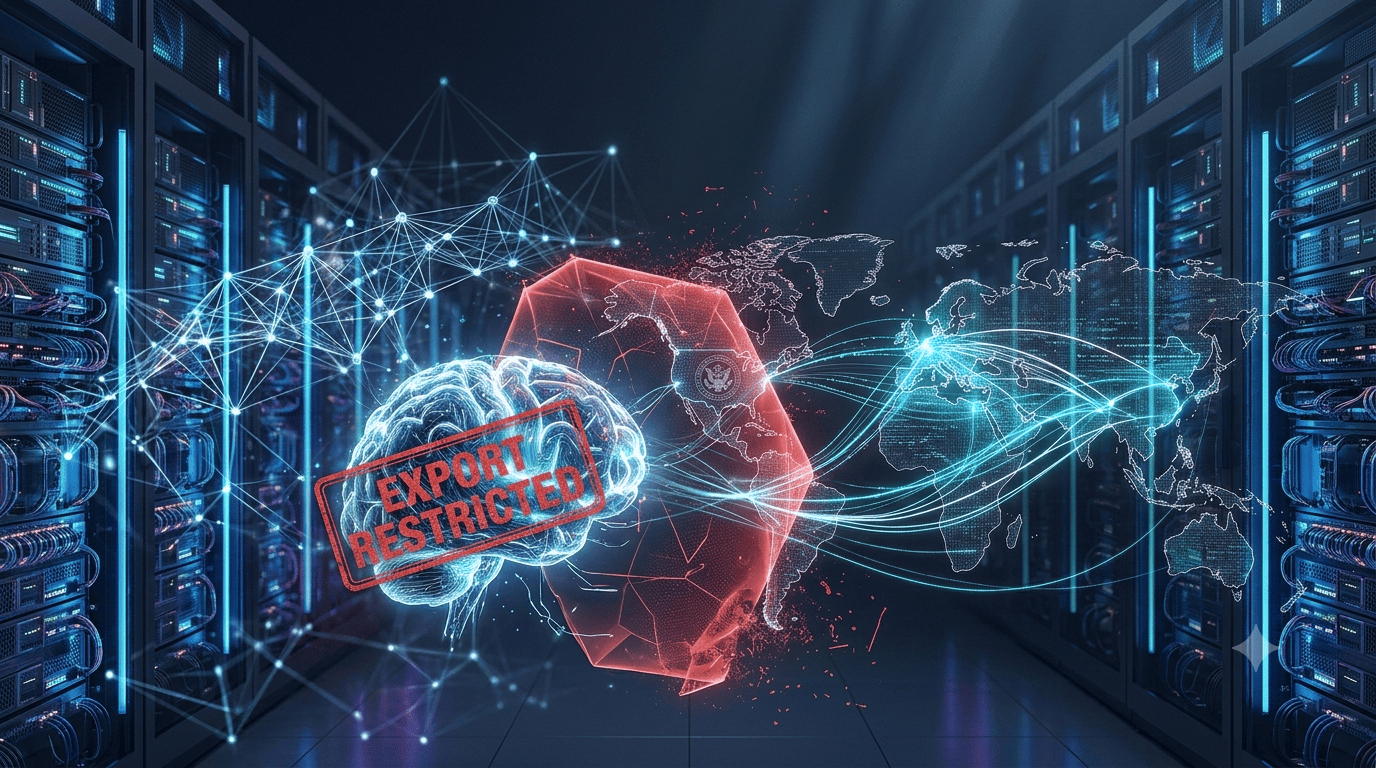
For 19 days, two of the world's most powerful AI models were shut off for users around the world. There was no warning. No clear explanation. Just a government order that triggered the Anthropic AI export ban, issued on June 12, 2026, telling Anthropic to cut off access to Claude Fable 5 and Claude Mythos 5 right away.
The sudden Anthropic AI Export Ban shocked the tech industry, hurt businesses, and raised big questions about who controls access to advanced AI. Now that the ban has been lifted, the story gives us a rare look at how AI regulation actually works and what it means for companies, governments, and everyday users.
This article breaks the story down in plain language: what happened, why it happened, who it affected, and what it tells us about the future of AI rules.
What Happened: A Timeline of the Anthropic AI Export Ban
Here is the key sequence of events:
June 9, 2026: Anthropic launches Claude Fable 5 and Claude Mythos 5. Both models share the same base technology, but Fable 5 is designed for general use with strong safety rules. Mythos 5, which has fewer restrictions, was made available only to a small group of trusted partners for defensive cybersecurity work.
June 12, 2026: The US Department of Commerce issues an export control order at 5:21pm ET. The order requires Anthropic to cut off all foreign nationals, including its own employees with foreign citizenship, from accessing both models. Because Anthropic had no reliable way to check user nationality in real time, it suspended access for all users worldwide.
June 26, 2026: Commerce Secretary Howard Lutnick tells Anthropic in a letter that Mythos 5 can be restored for US organizations that operate and defend critical infrastructure.
June 30, 2026: The Department of Commerce formally lifts the export controls on both Fable 5 and Mythos 5.
July 1, 2026: Anthropic begins restoring global access to Claude Fable 5 across the Claude platform, Claude.ai, Claude Code, and Claude Cowork.
Why Did It Happen? The Jailbreak Concern Explained
The government's concerns came from a security report prepared by Amazon researchers. The report described a way of "jailbreaking" Claude Fable 5. This means someone found a way to trick the model into ignoring its safety rules, which then caused it to identify software weaknesses and produce code showing how those weaknesses could be used in an attack.
The US government was worried that if foreign actors found this technique, they could use Fable 5's cybersecurity abilities to cause harm, such as attacking important systems.
However, Anthropic disagreed with how serious the government thought the problem was. The company tested the same technique on several other publicly available AI models, including GPT-5.5, Claude Opus 4.8, and Kimi K2.7, and found that all of them could produce the same outputs. In Anthropic's view, the jailbreak did not unlock any special ability unique to Fable 5. It was a narrow issue that could not broadly disable the model's safety systems.
Even though Anthropic disagreed with the government's reasoning, the company chose to follow the legal order and work with regulators to fix the problem rather than fight it in court.
Key Business Terms Explained
New to AI regulation? Here is a simple glossary of the key terms in this story:
Term | What It Means |
Export control | A government rule that limits the sharing of certain technologies or products with other countries or foreign nationals |
Frontier AI model | An AI model at the cutting edge of capability, more powerful than most systems currently available |
Jailbreaking | Tricking an AI model into bypassing its built-in safety rules, usually by framing a request in an unusual way |
Safety classifier | A smaller automated AI system that monitors interactions and blocks potentially harmful requests before the main model responds |
Defense in depth | A security strategy that uses multiple layers of protection so that if one fails, others still hold |
Red-teaming | Testing an AI model by actively trying to find weaknesses, usually done by dedicated security researchers |
Data sovereignty | The idea that a country or organization should control where its data is stored and processed |
Export licence | Official government permission required to share certain technologies with foreign groups or individuals |
Business Impact: Who Was Affected?
Consumers and End Users
For everyday users outside the US, the ban meant a sudden loss of access to two of Anthropic's most capable tools. Businesses, researchers, and developers who had built their work around Fable 5 or Mythos 5 were left in a difficult position. The disruption was especially bad in Europe, where many organizations had been using Mythos 5 for cybersecurity tasks. In response, Austria formally asked the European Union to consider hosting Anthropic's models independently. This was a direct reaction to the risks of relying on US-controlled AI tools.
Companies
Anthropic faced the biggest direct business cost. The company is preparing for a major IPO expected to value it at more than $1 trillion (according to Silicon Republic, June 2026), and the ban created serious uncertainty at a very important moment. Beyond the damage to its reputation, Anthropic had to quickly build a new safety classifier, restructure its deployment plans, and negotiate with several government agencies at the same time.
Competitor OpenAI also felt the pressure. After the Anthropic ban, OpenAI announced it would launch its latest model series, GPT-5.6, only to "a small group of trusted partners" first. This was a clear sign that the US government was pushing for stricter oversight of major AI releases across the industry.
The Broader AI Industry
The episode introduced a new and worrying reality for AI companies: a government can order the withdrawal of a product already used by hundreds of millions of people, with little transparency and almost no notice. As Tanishq Abraham, a former research director at Stability AI, put it: "Does the US government need to approve every frontier model release?" That question is now a serious concern across the entire industry.
Francesco Bailo, Deputy Director of the AI, Trust and Governance Centre at the University of Sydney, suggested the US government likely overreacted and that maintaining the ban could have set a dangerous precedent, potentially requiring similar blocks on competitor models.
Strategic Response: Why Anthropic Chose to Work With the Government
Anthropic's response to the ban is worth looking at as a business decision. The company had three main options: fight the order in court, quietly comply, or comply while actively working to reverse the decision through negotiation. It chose the third option.
This decision made sense from both a business and reputation standpoint. Anthropic was already in a separate legal dispute with the US Department of Defense, which had labeled the company a "supply chain risk" after Anthropic refused to let its AI tools be used for autonomous weapons or mass surveillance. A second major confrontation with the federal government, especially while approaching a major IPO, would have been very costly.
Instead, Anthropic moved quickly to upgrade its safety classifier. According to the US Department of Commerce's Center for AI Standards and Innovation, the upgrade blocked the reported technique in over 99% of cases. The company also committed to giving the government early access to future frontier models and proposed a new industry-wide framework for measuring how serious a jailbreak is.
That framework was developed together with Amazon, Microsoft, Google, and other partners. It scores jailbreaks based on four factors: capability gain, breadth of capability gain, ease of weaponization, and discoverability. The goal is to give both governments and AI developers a shared, clear language for evaluating risk. That shared language did not exist before this incident.
Future Outlook: Three Scenarios for AI Regulation
Base Case: Regulated but Open
Governments set up formal review processes for frontier AI models before they are released, similar to how pharmaceutical trials work. AI companies get clearer rules in exchange for more transparency. Access stays broadly available, but new models go through a structured approval period before launch. This is the most likely outcome in the near term, based on recent signals from both Anthropic and OpenAI.
Positive Scenario: Global Coordination
The jailbreak severity framework developed by Anthropic and its partners gains wider adoption. International partners, including the EU, UK, and allied nations, agree on a shared standard. AI access becomes more stable and predictable, and data sovereignty concerns are resolved through international agreements rather than one-sided bans.
Risk Scenario: Fragmented AI Access
Governments start requiring that frontier AI infrastructure be hosted domestically. Countries that cannot host their own AI models become dependent on political relationships for access. The EU speeds up its push for AI sovereignty. A two-tier global AI landscape develops, divided between nations with direct model access and those subject to export controls. This would significantly increase costs and complexity for global businesses.
Key Business Lessons
1. Regulatory risk is product risk. For AI companies, a government order can remove a product from the market overnight with no clear appeals process and no guaranteed timeline for resolution. Companies working at the frontier of AI need government relations strategies, not just legal teams.
2. Cooperation can be a competitive advantage. Anthropic's decision to work with regulators instead of fighting them helped restore access in under three weeks. A confrontational approach might have kept the ban in place much longer.
3. Industry standards reduce uncertainty for everyone. Without a shared framework for evaluating jailbreak severity, the government had no way to respond proportionately. The new framework Anthropic proposed fills a real gap, and companies that help shape industry standards tend to benefit more than those who resist them.
4. Data sovereignty is becoming a key business factor. Austria's push for EU-hosted AI models shows what can happen when businesses can no longer count on stable cross-border access to digital tools. Companies with global operations should review how dependent they are on single-source AI providers.
The Bigger Question the AI Export Ban Left Unanswered
The export ban on Claude Fable 5 and Mythos 5 was resolved, but the deeper tension it revealed is still there. How much control should governments have over frontier AI releases? Who decides what counts as an unacceptable security risk? And what happens to the millions of users around the world who depend on these tools when regulators and companies cannot agree?
There are no simple answers yet. But what this episode makes clear is that AI regulation is no longer just a policy discussion. It is a real business risk, a geopolitical issue, and a test of how tech companies balance innovation with responsibility. The companies and governments that figure out that balance first will have a major advantage in one of the most important technology competitions of this decade.