This is a scenario-based market analysis for educational purposes.
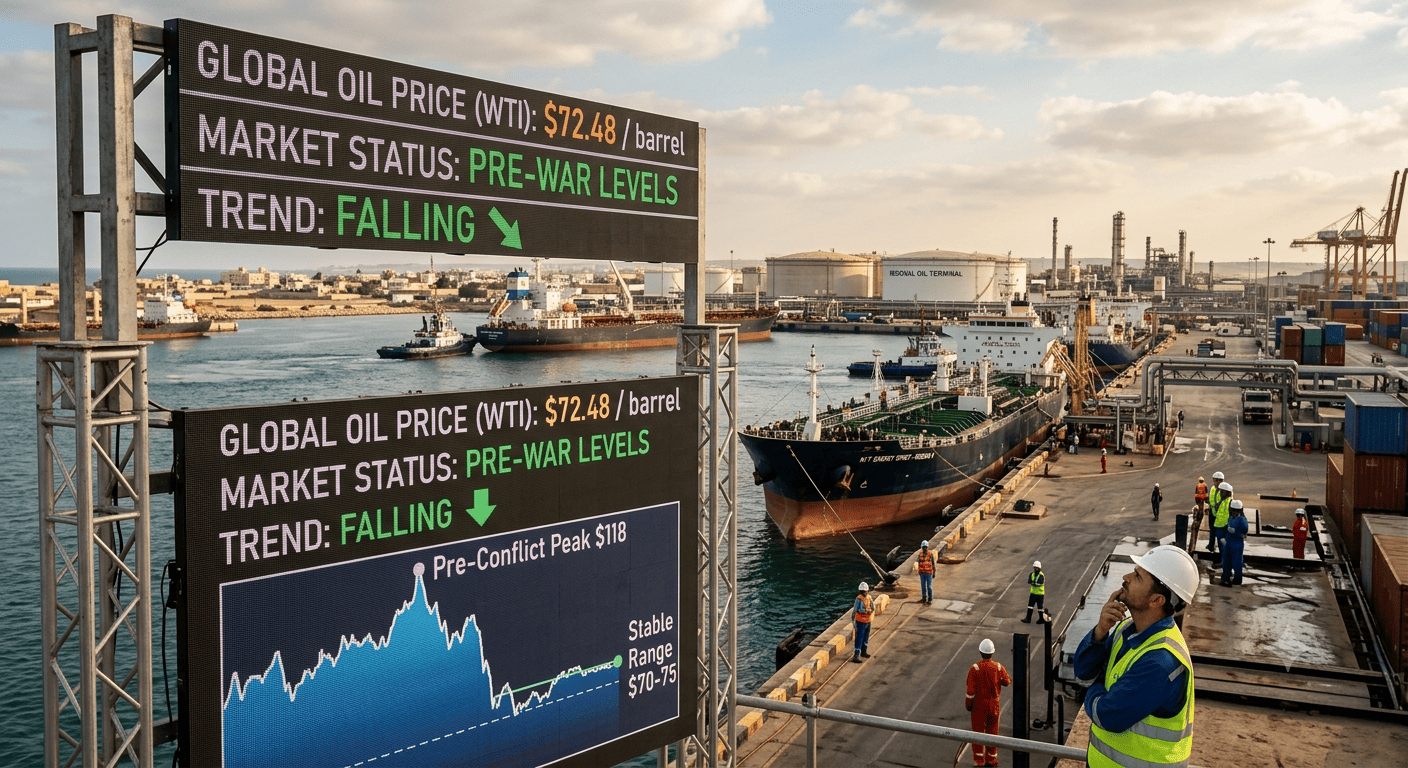
Quick answer: Oil prices have fallen back to around $72 to $73 a barrel. This is close to where prices were before a conflict in the Middle East pushed them much higher. A diplomatic agreement helped restore oil shipping in the region and reduced fears of a long-term supply problem.
A conflict in the Middle East blocked a key oil shipping route for several months. During that time, oil prices rose sharply and got close to $120 a barrel. This put a lot of pressure on businesses that depend on fuel and transport.
This article explains what caused prices to fall, how it affects businesses, and what risks still remain. The data shows short-term price relief, but uncertainty is not gone yet.
What Happened (Timeline)
In early 2026, a conflict in the Middle East grew quickly. The Strait of Hormuz, a narrow waterway that carries about one-fifth of the world's oil supply, faced a major disruption to shipping.
Oil prices jumped toward $120 a barrel as traders worried about supply. There was no clear end in sight, and inventories were falling.
In mid-June 2026, a diplomatic agreement was reached. It included a stop to military action, fewer trade restrictions on oil, and a plan to restore shipping through the strait within 30 days. Both sides agreed to work toward a longer deal within 60 days.
Prices responded quickly. Brent crude fell back close to pre-conflict levels within a few weeks. Shipping through the Strait of Hormuz started to recover, with more vessels passing through in the days after the agreement.
Business Impact (Operational Effects)
Lower oil prices affect businesses in four main ways.
Cost impact: Fuel and energy costs go down. Businesses that use a lot of energy, such as those in logistics and production, see faster savings.
Revenue impact: Oil producers earn less when prices fall. But businesses that buy energy as an input get more room to adjust their own prices.
Operational impact: Shipping lanes become more reliable again. Supply chains are easier to manage and plan around.
Risk impact: Both sides have 60 days to reach a final deal. If the deal holds, prices stay stable. If talks break down, disruptions could return.
Why oil Prices Fell (Drivers)
Several things drove prices lower at the same time.
Oil supply increased. Demand from major buying countries softened. Shipping conditions improved. Together, these created a small surplus in the market. Governments also released oil from their reserves, adding more supply. Ships began moving through the strait again using standard routes.
The futures market also showed signs of enough short-term supply. When oil for near-term delivery is cheaper than oil for later delivery, it usually means the market is not worried about running out of supply right now.
Sector Effects
Some industries feel the impact of lower oil prices more than others.
Transportation: Airlines, shipping companies, and freight operators pay less for fuel and benefit from more reliable shipping routes. Both reduce their costs.
Manufacturing: Businesses that use a lot of energy to make goods pay less for inputs. This gives them more flexibility on pricing.
Energy industry: Oil producers earn less per barrel when prices fall. Lower prices also change how different types of oil compete in the market.
Consumer markets: Lower energy costs can reduce prices for fuel, transport, and everyday goods. But this often takes some time to reach households.
Risks and Future Scenarios
There are four key areas worth watching.
Price changes: Watch how Brent crude moves within the $60 to $80 range. Changes in oil contract prices can signal whether supply is getting tighter or looser.
Demand shifts: Watch how major oil-buying countries return to the market. When governments refill their reserves, it adds demand and can push prices back up.
Shipping conditions: Keep an eye on vessel traffic through the Strait of Hormuz. Any new disruption can quickly affect global oil supply.
Policy changes: Stay updated on trade rules, sanctions, and energy policy. These can shift market conditions faster than most businesses expect.
Key Takeaways
Three outcomes are possible, depending on how current negotiations go.
Best case: Both sides reach a final deal within 60 days. Shipping fully recovers, trade restrictions ease on schedule, and prices stay near current levels or move lower.
Most likely: Talks continue but face some setbacks. Prices move in the $60 to $80 range as markets balance recovered supply against ongoing uncertainty.
Worst case: Talks break down. Supply disruptions return and prices rise sharply again.