Samsung AI chip profits have hit levels that few analysts predicted just two years ago. The South Korean electronics giant is posting record earnings quarter after quarter, and the driving force is almost entirely one thing: artificial intelligence. For business students and curious learners, this story is a masterclass in supply and demand, market power, and what happens when a niche technology suddenly becomes essential to the entire global economy.
In this post, we break down what is happening, why it is happening, and what it means for businesses, consumers, and the chip industry going forward.
What Is Happening?
Samsung Electronics is reporting the kind of profit numbers that make even seasoned investors do a double-take.
In the first quarter of 2026, Samsung's chip division posted an operating profit of 53.7 trillion won, which equals roughly $36.15 billion. That was up nearly 49-fold from just 1.1 trillion won in the same quarter a year earlier. The chip division alone made up 94% of Samsung's total quarterly profit. Total company revenue rose 69% year-on-year to 133.9 trillion won (The Guardian, April 2026).
For the second quarter of 2026, analysts forecast Samsung's total operating profit will reach approximately 86 trillion won ($56.35 billion), an estimated 19-fold jump from a year earlier. If confirmed, that would mark three consecutive quarters of record profit (Reuters, July 2026).
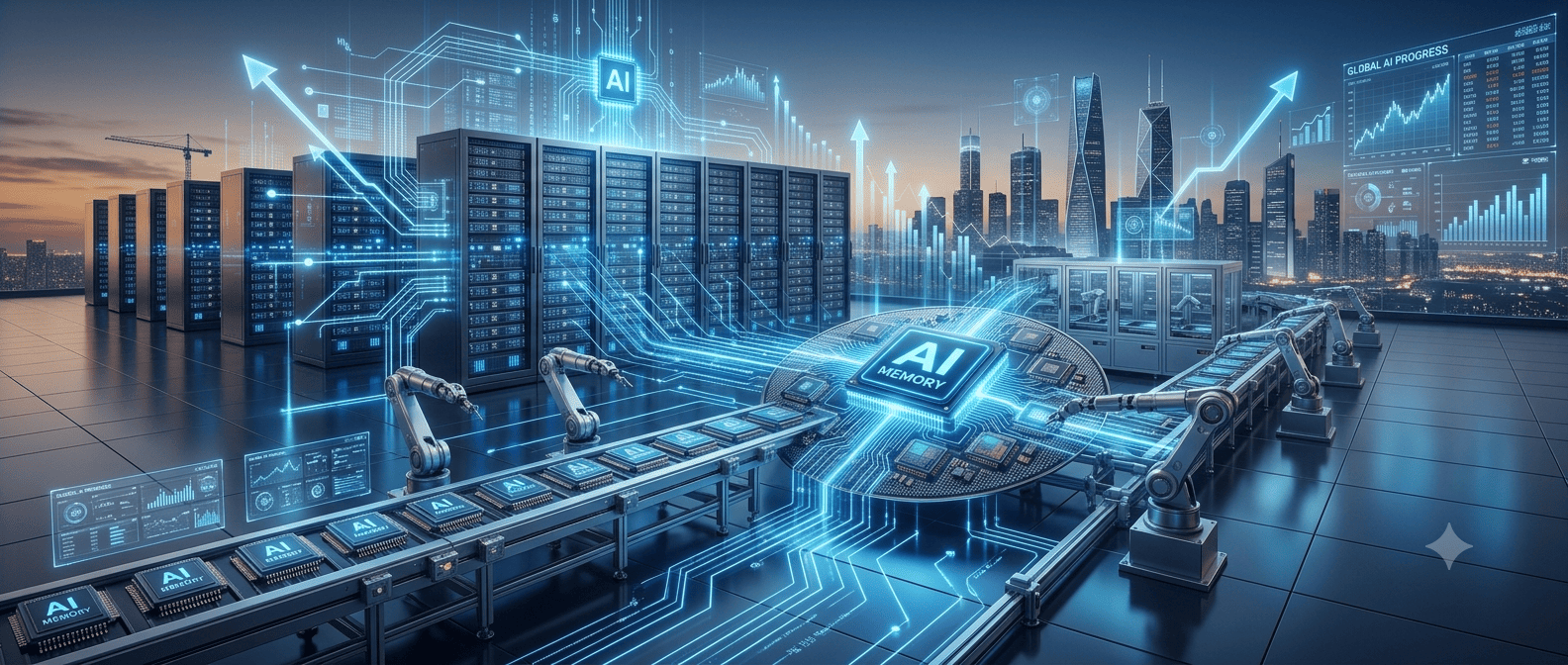
The specific chip products driving this surge are memory chips, particularly a type called high-bandwidth memory (HBM), which AI servers depend on to process enormous amounts of data at speed. Prices for conventional memory have also soared. According to Citi Research, average selling prices for DRAM rose 44% quarter-on-quarter in Q2 2026, while NAND flash storage prices rose 53% in the same period.
Why Samsung AI Chip Profits Are Rising
The short answer is that the global AI buildout has created a massive surge in demand for memory chips, and the supply simply cannot keep up.
Companies like Google, Amazon, Microsoft, and Meta are spending billions of dollars building AI data centers. These data centers need huge quantities of memory chips to run AI models, especially newer "agentic AI" systems that perform complex, multi-step tasks and require far more memory than earlier AI applications.
Samsung's own executives have been blunt about it. Kim Jaejune, a senior executive in Samsung's memory chip business, told analysts: "Our supply falls far short of customer demand. Based solely on the demand currently received for 2027, the supply-to-demand gap for 2027 is set to widen even further than in 2026" (The Guardian, April 2026).
Building new chip factories takes years and costs tens of billions of dollars. That long lead time means supply cannot simply be switched on to meet surging demand. The shortage is expected to persist at least through 2027.
Business Terms to Learn
This story is packed with important business concepts worth understanding.
Pricing power refers to a company's ability to raise prices without losing customers. Because chip supply is so tight and buyers desperately need these chips to build AI systems, Samsung has significant pricing power right now. Buyers have little choice but to pay higher prices.
Profit margin is the percentage of revenue a company keeps as profit after costs. Samsung's chip division operating margin reached 21.4% in Q4 2025, a dramatic improvement from near zero a year earlier, as rising prices outpaced production costs.
High-bandwidth memory (HBM) is a specialized, high-speed type of memory chip stacked in layers to handle the enormous data requirements of AI accelerators like those made by Nvidia. All of Samsung's available HBM production capacity for 2026 is already fully booked, and Samsung expects HBM sales to more than triple year-on-year in 2026 (PYMNTS, January 2026).
Supply chain concentration describes how dependent global markets are on a small number of producers. Three companies, Samsung, SK Hynix, and Micron, supply the vast majority of the world's advanced memory chips. When demand spikes, the entire global tech industry feels it.
Capital expenditure (CapEx) is the money a company spends on building or improving long-term assets like factories. Samsung spent 52.7 trillion won ($36.8 billion) on CapEx in 2025, mostly on new memory production capacity.
Barriers to Entry
A concept that explains a lot here is barriers to entry. Building a cutting-edge chip factory costs upwards of $20 billion and requires highly specialized knowledge, equipment, and years of development. These enormous barriers mean very few companies can compete, which reinforces the pricing power of those already in the market.
How It Affects Business
The chip shortage is rippling through the entire economy, and not always in a good way for everyone.
For chip companies, the boom has been extraordinary. Samsung's stock rose 158% in the first half of 2026. SK Hynix rose 273%, and Micron rose 242%. All three companies now have market valuations above $1 trillion (Reuters, July 2026).
For technology companies, securing enough chips to build AI systems has become a top strategic priority. Samsung has signed multi-year binding contracts with major customers to lock in supply, a sign of just how anxious large tech firms are about access.
For consumers, the pain is already showing up. Apple raised prices on iPads and MacBooks in June 2026 as memory costs skyrocketed. BT has warned customers to expect higher smartphone prices. Inside Samsung itself, the mobile phone division saw its profit fall 35% in Q1 2026 to 2.8 trillion won, squeezed by the same rising chip costs that are making the semiconductor division rich.
Put simply, the AI chip boom is good news if you make chips. It is costly if you buy them.
Strategic Response
Governments and companies are responding at scale.
In June 2026, Samsung and SK Hynix jointly pledged to invest 3,200 trillion won ($2.07 trillion) to expand chip production capacity in South Korea. Samsung plans to deploy its share of that investment between 2026 and 2040, working in cooperation with the South Korean government to ensure stable energy and infrastructure (Reuters, June 2026).
This level of state involvement reflects how strategically important semiconductor production has become. Countries that host chip factories gain significant economic and geopolitical advantages, which is why governments from the United States to Japan and Europe are offering subsidies and incentives to attract chipmakers.
Future Outlook
There are three broad scenarios for where this goes next.
The most likely near-term scenario is continued strong demand. AI investment from major cloud providers is expected to keep accelerating. According to JPMorgan, AI memory's share of cloud providers' capital expenditure is estimated at 52% in 2026 and is expected to exceed 70% in 2027. Nomura forecasts DRAM prices rising another 24% and NAND prices rising 25% in Q3 2026. If this holds, Samsung and its competitors will likely continue posting record profits.
A more optimistic scenario involves demand expanding beyond data centers into consumer devices. AI-powered smartphones, laptops, and wearables could create a second wave of memory demand on top of the existing AI server boom.
The downside risk, which analysts at JPMorgan have flagged, is that large tech companies could slow or pause their AI infrastructure spending if the business returns from AI do not materialize fast enough to justify costs. A sudden drop in AI investment could leave chipmakers sitting on expensive new factories and excess supply, causing prices to fall sharply.
Key Business Insights
A few clear takeaways stand out from this story.
First, being the supplier of a critical input gives enormous leverage. Samsung does not make AI software or AI chips in the way Nvidia does. It makes the memory those chips depend on, which turns out to be a very powerful position when that memory is scarce.
Second, supply constraints create unusual profit cycles in capital-intensive industries. The same long lead times that currently protect Samsung's pricing power could become a liability if demand softens while new factory capacity comes online.
Third, the winners and losers of a technology boom are not always who you expect. The biggest profit story in AI right now is not a software company. It is a memory chip manufacturer in South Korea.
The Bigger Picture
Samsung's AI chip profit surge is more than a corporate earnings story. It is a window into how deeply AI has restructured the global technology economy. The demand for intelligent systems has created scarcity at the hardware level, and that scarcity is reshaping prices, company strategies, and even government policy around the world.
For anyone studying business, the lesson is worth holding onto: when a technology shifts from optional to essential, the companies that supply the critical components often capture enormous value, sometimes more than the companies building the final product.