Vietnam has declared war on fake goods, and global brands are paying close attention. A nationwide crackdown on counterfeit products is reshaping how businesses, governments, and consumers think about brand protection. For anyone studying business, this story is more than just a news headline. It is a real-world case study packed with lessons on intellectual property, brand equity, and competitive strategy.
Read on to find out what is happening, why it matters, and what it teaches us about how modern businesses protect their value.
What Happened?
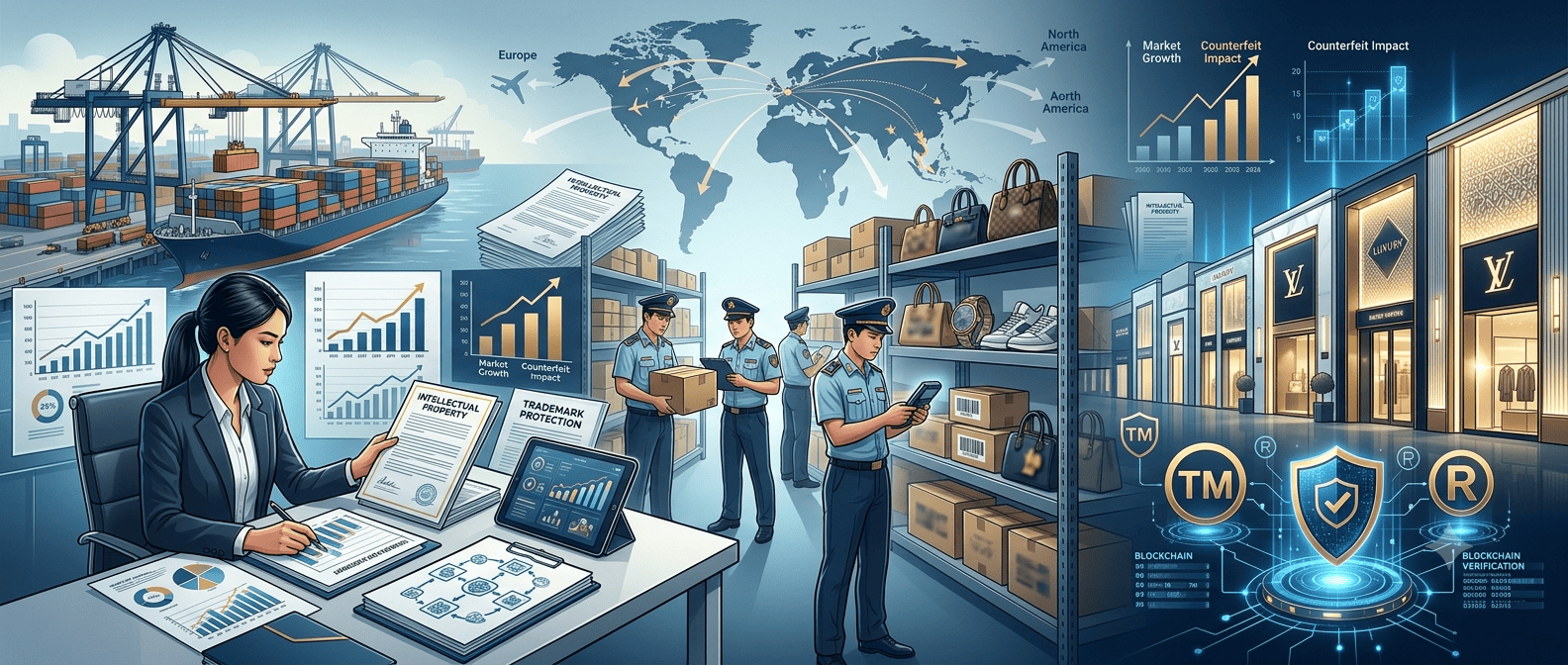
Vietnam's government has intensified efforts to combat the sale and production of counterfeit goods across the country. Authorities have raided markets, seized fake products, and handed out significant fines to sellers and manufacturers alike. The crackdown spans industries, from luxury fashion and electronics to cosmetics and pharmaceuticals.
Police inspected warehouses and popular markets, removing thousands of fake items that carried the logos of well-known brands such as Nike, Adidas, Gucci, Louis Vuitton, Cartier, and Rolex. This is not a one-off enforcement blitz. It reflects a deliberate shift in Vietnam's trade and economic policy, driven by both domestic goals and international pressure. The scale of the operation signals that Vietnam is serious about transforming its reputation in global commerce.
Why Is This Happening?
Several forces are driving Vietnam's push to clean up its markets.
International Trade Pressure
Vietnam has signed major trade agreements in recent years, including the EU-Vietnam Free Trade Agreement (EVFTA) and the Comprehensive and Progressive Agreement for Trans-Pacific Partnership (CPTPP). Both require stronger enforcement of intellectual property rights. Failing to comply risks trade penalties, tariffs, or exclusion from future deals. Put simply, cracking down on fakes is a condition of doing business with the world's biggest economies.
Protecting Brand Value
Counterfeit goods damage the reputations of legitimate brands. When a consumer buys a fake version of a product and has a poor experience, they often blame the original brand, not the counterfeit seller. By cracking down, Vietnam helps protect the integrity of both foreign and domestic brands operating within its borders.
Economic Incentives
Vietnam has ambitions to become a high-value manufacturing and export hub. Hosting a market flooded with counterfeits undercuts that goal. Attracting foreign direct investment (FDI) depends on convincing multinational companies that their intellectual property is safe. A robust brand protection framework makes Vietnam a more attractive place to do business.
Consumer Purchasing Power
As Vietnam's middle class grows, more consumers can afford genuine products. Demand for authentic goods is rising, and with it, the expectation that what they are buying is real. Counterfeiting becomes harder to sustain when consumers start choosing quality over price.
Business Concepts You Can Learn From This
This crackdown is not just a political story. It is a live demonstration of several core business concepts.
Intellectual Property (IP)
Intellectual property refers to creations of the mind, such as logos, designs, inventions, and brand names that are legally protected from unauthorized use. Counterfeiting is, at its core, an IP violation. Businesses invest heavily in developing IP, and without legal protection, competitors or criminals can copy it freely, eroding the original creator's competitive advantage.
Brand Equity
Brand equity is the commercial value a brand adds to a product, beyond its functional attributes. People pay more for a Nike shoe than a generic equivalent partly because of what the Nike brand represents. Counterfeit goods dilute that value by flooding the market with inferior imitations that trade on a brand's reputation without delivering its quality.
Supply Chain Integrity
Counterfeit goods often enter legitimate supply chains undetected. A pharmaceutical company, for instance, may find fake versions of its drugs being sold through its own distribution network. Managing supply chain integrity, meaning knowing exactly where products come from and where they go, is a critical business function that this crackdown highlights.
Consumer Behaviour
Why do consumers buy counterfeit goods? Price is the obvious answer, but it is more nuanced. Status, availability, and awareness all play a role. Understanding what drives consumer decision-making helps businesses design better pricing strategies, improve accessibility, and educate buyers on the risks of fake products.
Competitive Advantage
A company that successfully protects its IP, maintains brand equity, and operates in a regulated market holds a structural competitive advantage over rivals that cannot or will not do the same. Vietnam's crackdown effectively raises the barrier to entry for counterfeit operations, which benefits legitimate businesses competing on quality and innovation.
Who Does This Affect?
The impact of Vietnam's crackdown spreads across multiple groups.
Consumers gain access to safer, more reliable products, particularly in high-risk categories like cosmetics and medicine, where counterfeits can cause serious harm.
Companies operating in Vietnam benefit from stronger IP enforcement, which protects their revenue, brand reputation, and customer trust.
The Vietnamese government gains credibility as a trade partner and positions the country as a more attractive destination for foreign investment.
The broader industry sees a shift in competitive dynamics. Businesses that built operations around counterfeiting are disrupted, while legitimate manufacturers gain a fairer playing field.
How Brand Protection Drives Strategic Responses
Smart companies are not waiting for governments to protect them. Many are taking proactive steps to safeguard their brands:
Track-and-trace technology: QR codes, holograms, and blockchain-based product verification help consumers and retailers confirm authenticity.
Legal action: Brands are increasingly pursuing litigation against counterfeit producers and distributors in Vietnamese courts, which are now more receptive to IP claims.
Consumer education: Campaigns that teach buyers how to spot fakes reduce demand at the source.
Retail partnerships: By partnering with trusted local retailers and e-commerce platforms, brands reduce the risk of fake goods infiltrating their distribution network.
What Happens Next? Three Scenarios
Base Case: Vietnam maintains consistent enforcement, builds trust with trade partners, and gradually reduces the volume of counterfeit goods in circulation. Foreign brands grow more confident operating in the market.
Upside Case: Stronger IP enforcement attracts significant new FDI. Vietnamese domestic brands also benefit, developing their own brand equity in a market that now values authenticity. Vietnam becomes a regional model for IP protection in Southeast Asia.
Downside Case: Enforcement proves difficult to sustain due to resource constraints or corruption. Counterfeit networks adapt and move underground. International trade partners grow frustrated, and Vietnam's reputation as an IP-safe market stalls.
Key Business Lessons
Every business student can take something from this story. Here is what stands out:
Brand protection is a business strategy, not just a legal issue. It directly affects revenue, customer loyalty, and competitive positioning.
Trade agreements create compliance requirements. Businesses operating across borders need to understand the regulatory environments tied to international trade deals.
Consumer behaviour shapes market enforcement. Rising purchasing power and demand for authenticity make crackdowns more effective, and more necessary.
IP is a business asset. Like physical assets, it needs to be actively managed, defended, and valued on a balance sheet.
Governments and businesses are interdependent. Market integrity benefits both. When governments enforce IP laws, businesses win. When businesses advocate for IP protection, governments have more incentive to act.
Business Terms Explained
Term | Definition |
Intellectual Property (IP) | Legal rights protecting creations like inventions, designs, and brand names |
Brand Equity | The additional value a recognizable brand adds to a product beyond its functional features |
Counterfeit Goods | Fake products made to imitate genuine branded items without authorization |
Foreign Direct Investment (FDI) | Investment made by a company or individual in one country into business interests in another |
Supply Chain Integrity | Ensuring every step of a product's production and distribution is authentic and traceable |
Competitive Advantage | A unique edge that allows a business to outperform its competitors |
Consumer Behaviour | The study of how individuals make purchasing decisions |
Trade Agreement | A deal between countries that sets rules for imports, exports, and related policies |
Conclusion
Vietnam's counterfeit crackdown is a compelling example of how global trade, government policy, and business strategy intersect. For anyone studying business, it shows that protecting a brand goes far beyond marketing. It touches law, economics, supply chain management, and consumer psychology all at once.
The companies that thrive long-term are not just the ones with the best products. They are the ones that understand the environment they operate in and take deliberate steps to protect what makes them valuable.
The next time you see a fake product being sold, ask yourself: who loses, who gains, and what does that reveal about the market? That question is where good business analysis begins.