Most businesses that fail do not fail because of a bad product. They fail because they had no clear direction. No sense of priorities. No plan for what to do when things go wrong. That is where strategic planning comes in, and understanding it can be the difference between a business that grows and one that simply survives.
This guide breaks down everything you need to know, from what it means and why it matters, to a step-by-step look at how it works in practice. By the end, you will have a clear picture of how to apply these ideas to any business, big or small.
What Is Strategic Planning?
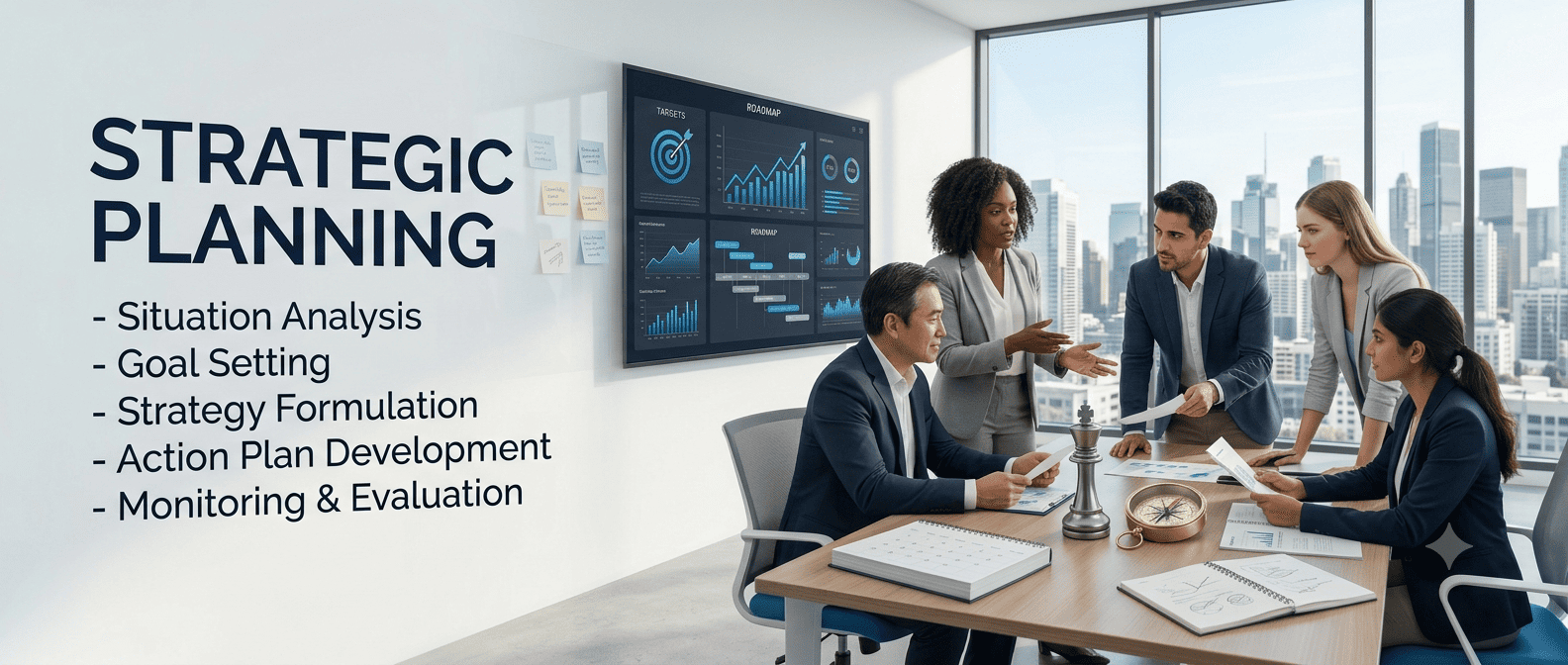
Strategic planning is the process of defining where a business wants to go and mapping out how to get there. It involves setting goals, analyzing the environment the business operates in, and deciding how to use available resources to achieve long-term success.
Think of it as a roadmap. Without one, you might still reach your destination eventually. But with one, you get there faster, with fewer wrong turns, and with a much better idea of what to expect along the way.
Strategic planning is not something only large corporations do. A local bakery, a tech startup, and a nonprofit organization can all benefit from having a clear plan in place.
Why Does It Matter?
A well-built plan does more than just give a business direction. It touches almost every part of how a business operates.
Better Decision Making
When priorities are clearly defined, decisions become easier to make. Leaders spend less time debating what to focus on and more time acting on what matters most. Rather than reacting to every challenge as it comes, they can respond proactively because the plan already accounts for potential obstacles.
Efficient Use of Resources
Time, money, and people are limited in every organization. A clear plan ensures these resources go toward activities that support the business's goals, rather than being spread thin across low-impact tasks.
Improved Employee Performance
When employees understand the bigger picture and how their daily work contributes to it, engagement tends to go up. People perform better when they know why their role matters.
Stronger Competitive Position
Planning forces businesses to study the market and understand competitors. That knowledge helps identify opportunities others might miss and position the business more effectively.
Reduced Business Risk
No plan eliminates risk entirely, but a good one helps anticipate threats before they become crises. Businesses that plan ahead can build contingency measures and avoid being caught off guard.
How the Process Works
Strategic planning follows a logical sequence. Each step builds on the one before it.
Step 1: Understand the Current Situation
Before deciding where to go, a business must understand where it currently stands. This involves an honest look at internal strengths and weaknesses, as well as external opportunities and threats. The most common tool for this is a SWOT analysis (Strengths, Weaknesses, Opportunities, Threats).
Why this step matters: Without a clear picture of where the business currently stands, any plan built on top of it risks being based on assumptions rather than reality.
Step 2: Define the Vision and Mission
The vision describes where the business wants to be in the future. The mission explains why it exists and what value it provides. These two statements serve as the foundation for everything else in the plan.
Why this step matters: Without a clear vision and mission, teams can easily pull in different directions, making it impossible to build a strategy that everyone understands and works toward.
Step 3: Set Strategic Goals
Goals should be Specific, Measurable, Achievable, Relevant, and Time-bound. These are often called SMART goals. Vague goals like "grow the business" are not useful. A better goal would be: "Increase monthly revenue by 20% within 12 months by expanding the customer base in the local market."
Why this step matters: Without measurable goals, businesses cannot evaluate whether their strategy is producing results.
Step 4: Analyze the Business Environment
This step takes a deeper look at external factors that could affect the plan. Market trends, customer behavior, competitor activity, and broader economic conditions all play a role. Tools like a PESTLE analysis (Political, Economic, Social, Technological, Legal, Environmental) help organize this thinking.
Why this step matters: Without understanding the external environment, a business may pursue goals that are disconnected from market realities, leaving it vulnerable to threats it never saw coming.
Step 5: Develop Strategies
Based on the analysis, the business decides on the specific approaches it will take to reach its goals. This could involve launching a new product, entering a new market, reducing costs, or improving customer experience.
Why this step matters: Without clearly defined strategies, even the most well-researched goals remain wishes — having a concrete approach turns intention into a plan that teams can actually act on.
Step 6: Implement the Plan
A plan without action is just a document. Implementation means assigning responsibilities, setting timelines, and allocating resources. Everyone involved needs to know their role and what is expected of them.
Why this step matters: Even the most carefully crafted strategy delivers no value if it stays on paper — execution is what turns a plan into real outcomes that move the business forward.
Step 7: Monitor and Review Progress
Circumstances change. Markets shift. New competitors emerge. Regular check-ins allow businesses to measure progress against their goals, identify what is working, and adjust where necessary. Key Performance Indicators (KPIs) are the most useful tools for tracking this.
Why this step matters: Without regular monitoring, a business has no way of knowing whether its strategy is working or quietly falling behind until it is too late to course correct.
A Real-World Example
Consider a family-owned restaurant in Lahore called Karachi Dastarkhwan. For years, the restaurant operated without a formal plan. The owners cooked what they knew, opened their doors, and hoped customers would come. Business was steady but not growing.
After sitting down to map out a plan, they identified a clear opportunity: the neighborhood had a growing number of office workers looking for weekday lunch options, but no restaurant nearby catered specifically to that crowd.
The family set a goal to increase weekday lunch sales by 30% within six months. They developed a strategy around a fixed-price lunch menu with faster service, promoted it on social media, and assigned one family member to manage customer feedback.
Within four months, weekday foot traffic had nearly doubled. By reviewing their progress regularly, they were also able to spot that customers wanted more vegetarian options, and they added those quickly. The plan gave them direction, focus, and a way to keep improving.
Common Pitfalls to Avoid
Even well-intentioned plans can go wrong. These are the most frequent mistakes businesses make.
Setting Unrealistic Goals: Ambition is valuable, but goals that are impossible to reach within available resources lead to frustration and loss of confidence in the plan.
Ignoring Market Changes: A plan built on outdated assumptions quickly becomes irrelevant. Businesses must stay alert to what is happening around them.
Poor Communication: If employees do not understand the plan or their role in it, execution suffers. Clear, consistent communication is essential.
Focusing Only on Short-Term Results: Quick wins are satisfying, but sacrificing long-term growth for short-term gains is a common trap.
Failing to Measure Progress: Without KPIs and regular reviews, it is impossible to know whether the plan is working or where it needs to change.
Putting It Into Practice
You do not need a formal business background to start planning strategically. The process can begin with a few simple questions:
Where is the business right now?
Where do you want it to be in one, three, or five years?
What is standing in the way?
What resources do you have available?
How will you know when you are making progress?
Answering these questions honestly is the foundation of any solid plan. From there, the steps outlined above provide a structured path forward.
Key Takeaways
Strategic planning gives businesses a clear direction and a framework for making better decisions.
The process involves understanding the current situation, setting goals, building strategies, implementing them, and reviewing progress regularly.
Common mistakes include vague goals, poor communication, and failing to adapt when circumstances change.
Businesses of any size and industry can benefit from having a plan in place.
Regular reviews and performance tracking are what keep a plan relevant and effective over time.
Start Planning, Start Growing
Strategic planning is not a one-time event. It is an ongoing habit that keeps a business focused, adaptable, and positioned for long-term success. The businesses that thrive are rarely the ones with the most resources. They are the ones that know exactly where they are going and have a clear plan for getting there.
Start small if needed. Ask the right questions, set clear goals, and commit to reviewing your progress. That discipline, practiced consistently, is what separates businesses that grow from those that stay stuck.