A business without a plan is like a road trip without a map. You might eventually get somewhere, but you will waste a lot of time, money, and energy along the way.
Planning is one of the most important functions in management. It shapes how a business sets goals, uses resources, and responds to challenges. Whether you are running a small bakery or managing a large company, a clear plan makes all the difference.
This post breaks down what planning means in a business context, why it matters, how it works, and what mistakes to avoid. By the end, you will have a solid understanding of how to use planning to make smarter business decisions.
A Small Problem That Became Expensive
A clothing shop owner in Karachi decided to stock up on winter jackets in September. She ordered 500 units without checking last year's sales data or looking at the weather forecast. By December, only 120 jackets had sold. The rest sat in storage for months, tying up cash she needed for other things.
The problem was not the jackets. The problem was the lack of a plan.
What Is Planning in Management?
Planning in management is the process of setting goals and deciding the steps needed to achieve them. It involves looking at where your business is now, where you want it to go, and how you will get there.
According to Indeed, planning typically includes analyzing the company's resources and finances, researching market trends, and preparing for potential risks. It can be informal, such as a quick team meeting to discuss weekly goals, or formal, such as a written document outlining targets for the next five years.
At its core, planning gives a business direction.
Why Does Planning Matter?
It Improves Productivity
When employees know what they are working toward, they can focus their time and energy more effectively. A clear plan removes confusion and helps everyone stay on task.
It Reduces Costs
Planning allows managers to assess what resources they actually need. This helps avoid over-ordering, overstaffing, or spending money on things that do not support the business goals.
It Supports Better Decision Making
A plan gives managers a framework to evaluate choices. Instead of reacting randomly to problems, they can make decisions that are aligned with the company's overall direction.
It Improves Communication
When a plan is shared across a team, everyone understands their role. This reduces misunderstandings and makes it easier for different departments to work together.
It Increases Customer Satisfaction
A well-planned business delivers more consistently. Products arrive on time, service quality stays high, and customers are less likely to encounter problems.
It Reduces Risk
Planning includes thinking about what could go wrong and preparing for it. A contingency plan means you are not caught off guard when challenges arise.
How Planning Works
Step 1: Set Clear Objectives
Start by deciding what you want to achieve. Goals should be specific and measurable. For example, "increase monthly sales by 15% over the next three months" is far more useful than "grow the business."
Step 2: Analyze the Current Situation
Look at where your business stands right now. What are your strengths? What is holding you back? Reviewing sales data, customer feedback, and competitor activity gives you a realistic starting point.
Step 3: Identify Possible Alternatives
There is rarely just one way to reach a goal. Brainstorm different approaches. For example, if you want to attract more customers, you could lower prices, improve marketing, expand your product range, or improve customer service.
Step 4: Choose the Best Plan
Compare your options and pick the one that best fits your resources, timeline, and goals. Consider the risks and benefits of each approach before committing.
Step 5: Implement the Plan
Put the plan into action. Assign tasks to team members, set deadlines, and make sure everyone has the resources they need to do their part.
Step 6: Monitor and Review Progress
Check in regularly to see how things are going. Are you on track? If not, why? Regular reviews allow you to adjust the plan before small issues become big problems.
Types of Planning
Strategic Planning
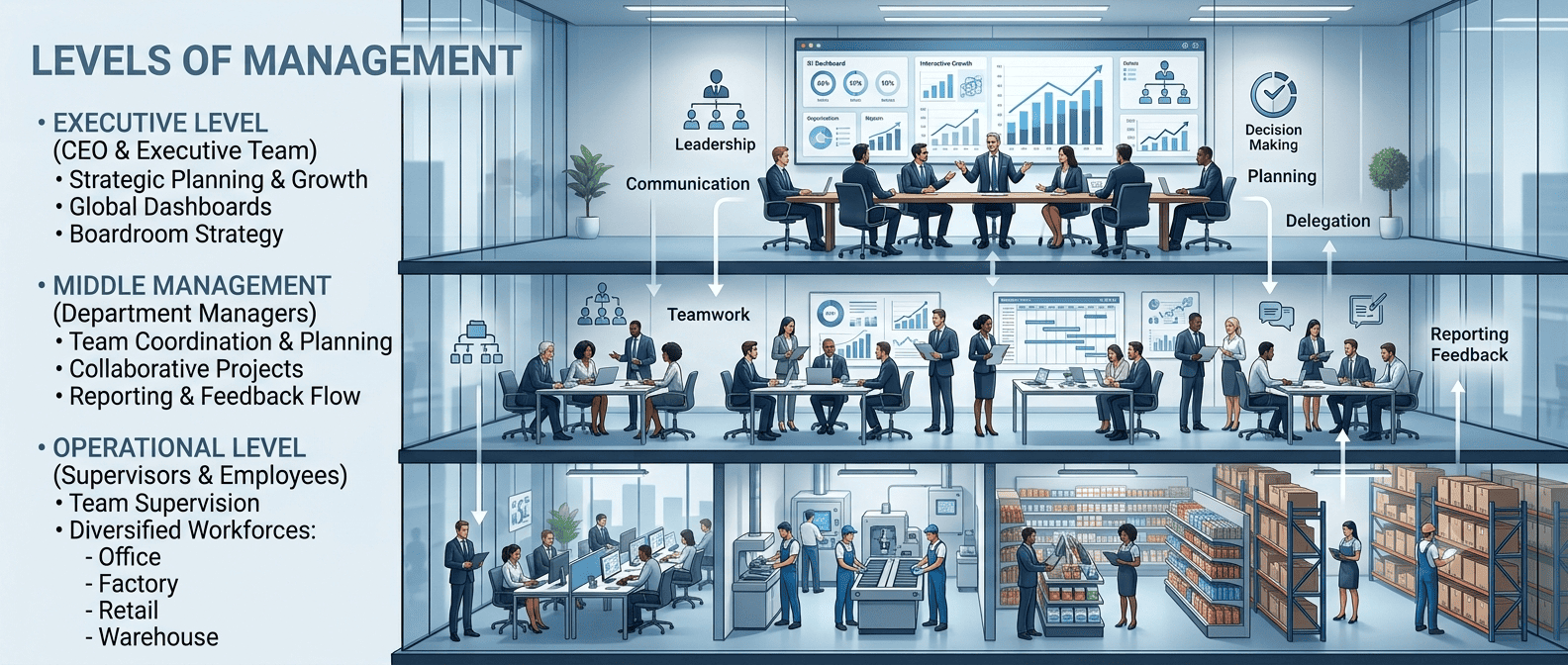
Strategic planning focuses on the long term, typically three to five years. It looks at the big picture: where the company wants to be, what markets it wants to enter, and how it plans to grow. This type of planning is usually done by senior leadership.
Tactical Planning
Tactical planning breaks the strategic plan into shorter-term actions, usually covering weeks or months. It focuses on how specific teams or departments will contribute to the bigger goals. According to Planview, tactical planning is more reactive and centers on immediate steps rather than long-term vision.
Operational Planning
Operational planning covers the day-to-day work of the business. It includes schedules, staffing, inventory management, and other routine activities that keep the business running smoothly.
Type of Planning | Time Frame | Focus | Who Handles It | Simple Example |
Strategic Planning | 3 to 5 years | Big-picture goals and direction | Senior leadership | A textile company plans to expand into international markets |
Tactical Planning | Weeks to months | Department actions and short goals | Middle managers | The marketing team runs campaigns to support expansion |
Operational Planning | Daily or weekly | Routine tasks and day-to-day work | Supervisors and staff | A bakery manager prepares weekly staff schedules and orders |
Real World Business Example
Ali runs a small bakery in Lahore. Last year, he noticed that sales dropped every January after the holiday rush. Instead of waiting for it to happen again, he made a plan.
He set a goal to maintain steady sales through January by introducing a new product line of affordable everyday snacks. He analyzed his costs, identified suppliers, trained his staff, and launched a small promotion in late December.
The result? January sales were 20% higher than the previous year. A simple plan made a measurable difference.
Common Mistakes When Planning
Setting Unrealistic Goals
Ambitious goals are useful, but goals that are impossible to achieve will only discourage your team. Make sure your targets are challenging but still within reach given your current resources.
Ignoring Risks
Every plan carries some level of risk. Skipping the risk assessment step leaves you unprepared when things go sideways. Always ask: what could go wrong, and what will we do if it does?
Failing to Communicate
A plan that exists only in the manager's head is not a plan at all. Share it with your team. Make sure everyone understands their role and why it matters.
Never Reviewing the Plan
Business conditions change. A plan that made sense six months ago might not make sense today. Schedule regular reviews to keep your plan relevant.
Planning Without Data
Guessing is not planning. Use real numbers, past performance, market research, and customer feedback to inform your decisions. The clothing shop owner from the earlier example could have avoided her losses by simply reviewing her previous year's sales data.
Practical Application
Consider this scenario: you are launching an online clothing business targeting young women aged 18 to 30 in Pakistan.
Try working through these questions using the six-step planning process:
Objective: What is your sales target for the first three months?
Situation: Who are your main competitors, and what are they offering?
Alternatives: Will you sell through your own website, Instagram, or an existing marketplace like Daraz?
Best Plan: Which option gives you the best chance of reaching your target audience with your current budget?
Implementation: What tasks need to happen before launch, and who is responsible for each?
Review: How will you measure success, and when will you check in to assess progress?
Going through this exercise forces you to think critically and make intentional decisions rather than reactive ones.
Key Takeaways
Planning in management means setting goals and deciding how to achieve them
It improves productivity, reduces costs, and supports better decisions
The planning process has six key steps, from setting objectives to monitoring progress
There are three main types: strategic, tactical, and operational
Common mistakes include ignoring risks, setting unrealistic goals, and not reviewing the plan
Good Planning Is a Habit, Not a One-Time Task
The most successful businesses do not plan once and move on. They treat planning as an ongoing practice, reviewing and refining their approach as they learn more about their market and their customers.
If you are studying business or preparing to launch your own venture, start small. Practice setting a goal, mapping out the steps, and tracking your progress. The more you do it, the more natural it becomes.
Start with one goal this week. Write it down, break it into steps, and check in on your progress by Friday. That is planning in action.