Every successful business decision starts with one thing: knowing your market. But how do companies figure out what customers want, how much they'll pay, and who their competitors are? The answer is market research.
This guide breaks down everything you need to know about market research: what it is, why it matters, how to do it step by step, and the most common mistakes to avoid. By the end, you'll have a clear picture of how market research works and how to apply it yourself.
What Is Market Research?
Market research is the process of gathering, analyzing, and interpreting information about your target audience, market, and competitors. It helps organizations understand what people need, want, think, and do, and why.
Put simply, market research replaces guesswork with evidence. Instead of assuming what customers want, you find out.
Why Market Research Matters
Good market research does three important things for a business:
1. It supports confident decision-making. When a business tests its messaging, pricing, or product ideas with real customers before launching, it avoids costly mistakes and moves forward with confidence.
2. It creates a deeper understanding of customers. Market research helps teams go beyond what customers do to understand why they do it. For example, you might discover that customers are leaving your product not because of price, but because it's confusing to use. That's an insight that changes everything.
3. It helps teams prioritize resources. Every business has a limited budget and limited time. Market research helps identify which ideas, features, or audiences are worth investing in, and which ones are not.
How Market Research Works: A Step-by-Step Process
Step 1: Define the Objective
Start by identifying the decision you need to make or the problem you need to solve. Are you launching a new product? Trying to understand why customers are leaving? The more specific your goal, the better your research will be.
Step 2: Identify Your Target Audience
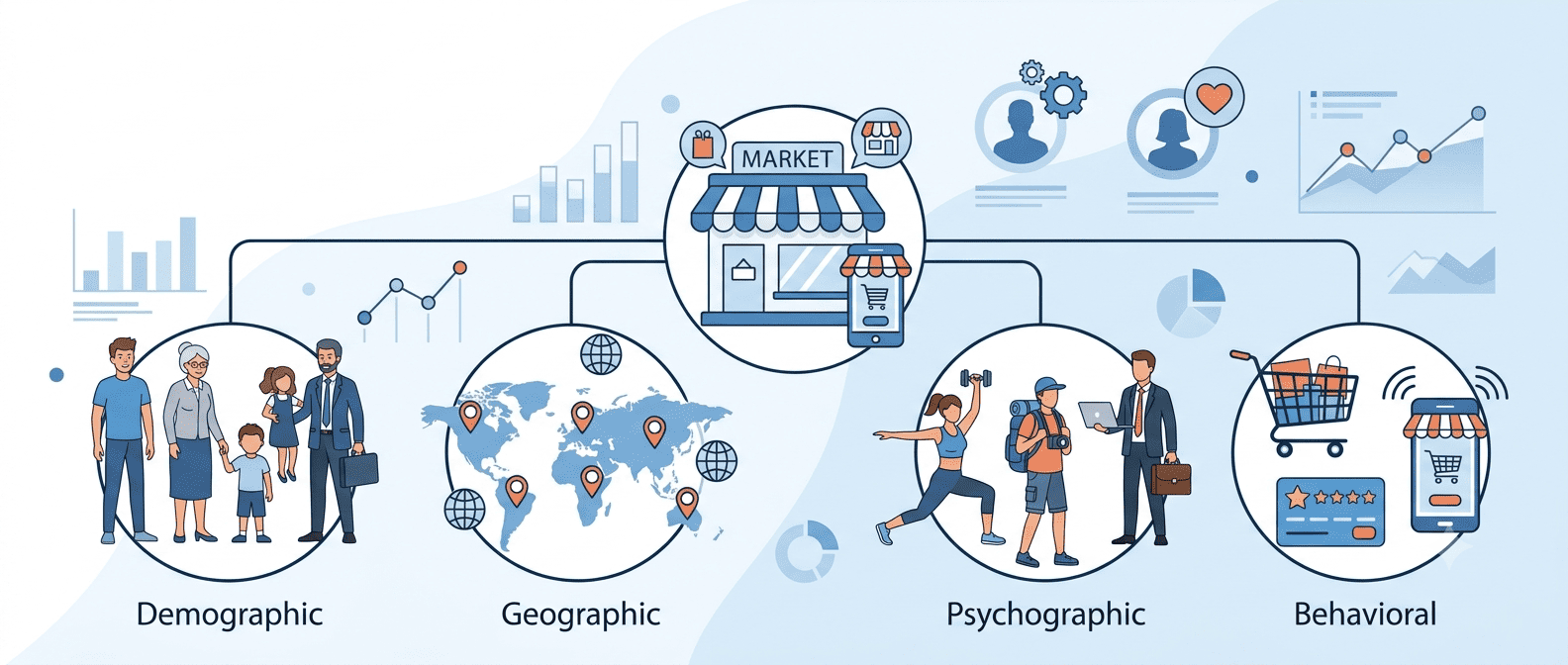
Who do you need to hear from? Define your ideal research participants clearly, including their age, location, buying behavior, or any other criteria relevant to your question.
Step 3: Choose Research Methods
Select the methods that best fit your goals, timeline, and budget. This might be interviews, surveys, focus groups, or a mix of several approaches.
Step 4: Collect Data
Run your study. This could mean sending out surveys, conducting interviews, or reviewing existing reports and data. Keep track of everything you gather.
Step 5: Analyze the Findings
Look for patterns across your data. Don't just report numbers; explain what they mean. Combine qualitative feedback with quantitative results to get the full picture.
Step 6: Make Business Decisions
Turn your insights into action. Share your findings with the right stakeholders and use them to guide the business decision you set out to make in Step 1.
Types of Market Research
Primary Market Research
Primary research is data you collect yourself, specifically for your project. It's tailored to your exact question and audience. Common methods include surveys, one-on-one interviews, focus groups, and user testing. The main advantage is relevance, but it takes more time and money to run.
Secondary Market Research
Secondary research uses data that already exists, such as industry reports, government statistics, academic studies, or customer reviews. It's faster and more cost-effective, making it ideal for early-stage exploration. The limitation is that it wasn't collected with your specific question in mind.
The best approach? Use both. Secondary research gives you quick context, while primary research fills in the gaps with deeper, more targeted insight.
Qualitative Research
Qualitative research focuses on depth. It explores motivations, feelings, and opinions through open-ended questions. Methods like in-depth interviews and focus groups help you understand the why behind behavior.
Quantitative Research
Quantitative research focuses on scale and measurement. It uses structured surveys and larger sample sizes to produce data that can be counted, compared, and tracked. This type of research helps you answer questions like "How many?" and "How often?"
Primary vs. Secondary Research: A Quick Comparison
Primary Research | Secondary Research | |
Data source | Collected by you | Already exists |
Cost | Higher | Lower |
Time | Longer | Faster |
Relevance | Very specific to your needs | May not fit your exact question |
Best for | Testing ideas, validating decisions | Background research, trend analysis |
Advantages and Disadvantages of Market Research
Advantages:
Reduces the risk of making costly mistakes
Helps you understand customers on a deeper level
Supports smarter, evidence-based decision-making
Improves your ability to target the right audience
Disadvantages:
Can be time-consuming and expensive to run well
Results can become outdated quickly in fast-moving markets
Poor research design leads to misleading conclusions
Common Mistakes and How to Avoid Them
1. Asking the wrong people. If your sample doesn't match your target audience, your findings won't be reliable. Always define who you need to hear from before you start.
2. Writing ambiguous questions. Vague questions lead to vague answers. Keep questions clear, specific, and free from bias.
3. Relying on just one method. No single method tells the full story. Combine qualitative and quantitative approaches for stronger, more reliable insights.
4. Starting with assumptions. Research is most valuable when it challenges your thinking, not just confirms it. Stay open to unexpected findings.
5. Burying findings in long reports. A good research report leads with the key insights and connects them directly to what the business should do next.
Practical Tips for Better Market Research
Keep surveys short. Long surveys have lower completion rates and less reliable responses.
Compensate participants fairly. Respecting people's time leads to better quality responses.
Revisit your research regularly. Markets change. What was true six months ago may no longer be accurate.
Store findings in a shared place. Make insights easy to find and reference so they continue to add value over time.
Start Small, Learn Fast
Market research doesn't need to be complicated. Even a handful of honest customer conversations can reveal insights that shift the direction of a product, campaign, or business strategy. The key is to start with a clear question, choose the right method, and act on what you learn.
The businesses that treat market research as an ongoing habit, rather than a one-time project, are the ones best positioned to stay ahead of changing customer needs.