Every business needs to answer four basic questions: What are we selling? How much should it cost? Where can people buy it? And how will they find out about it? These four questions form the foundation of the marketing mix, a simple but powerful framework that has helped businesses make smarter decisions for decades.
Whether you are a student learning marketing for the first time, someone thinking about starting a business, or just curious about how companies work, this guide will help you understand the marketing mix in plain, simple language. We will walk through what it is, how it works, real examples, and tips you can actually use.
What Is the Marketing Mix?
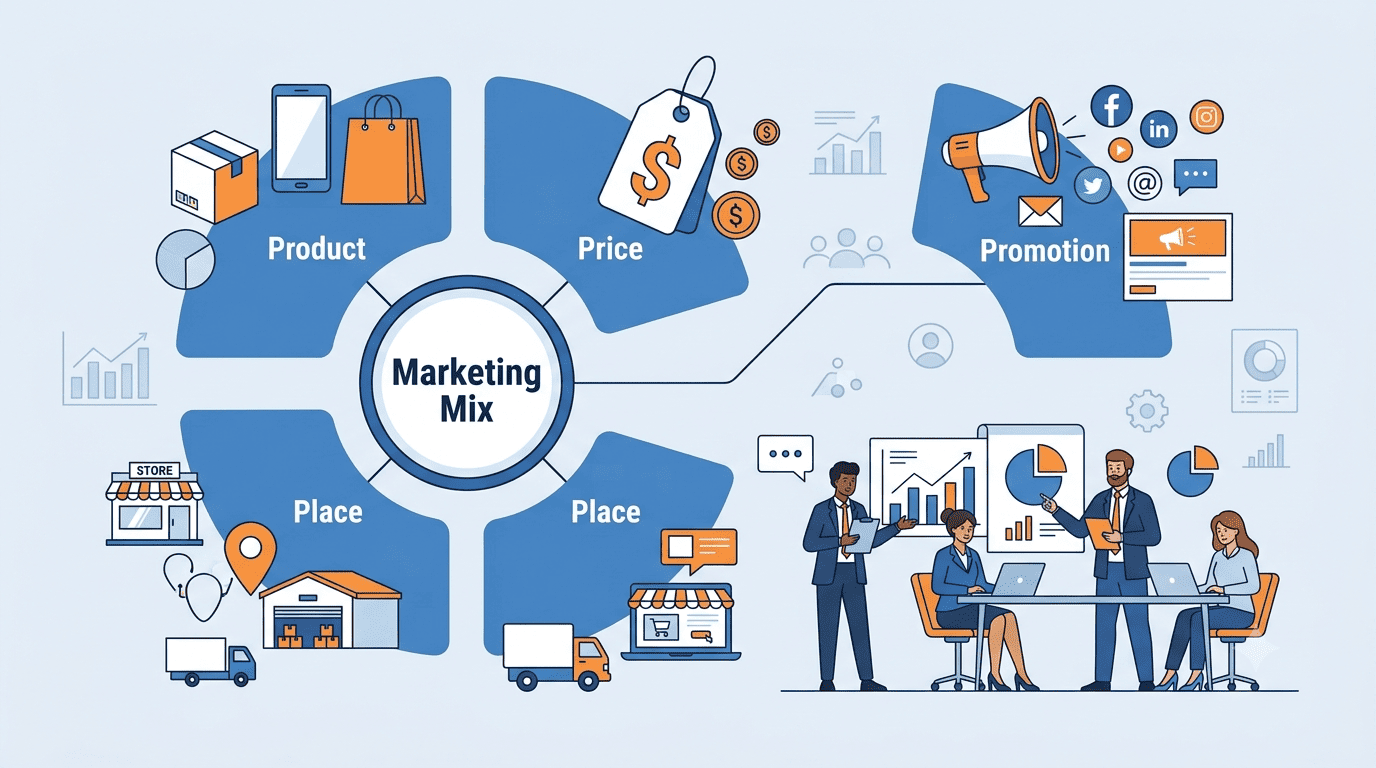
The marketing mix is a planning tool that helps businesses decide how to sell a product or service. It is built around four key parts called the 4Ps of marketing: Product, Price, Place, and Promotion.
This idea was first introduced by E. Jerome McCarthy in his 1960 book called Basic Marketing: A Managerial Approach. Even today, more than 60 years later, businesses and marketing students all over the world still use it.
In simple words, the marketing mix helps a business make sure the right product reaches the right people, at the right price, in the right place, with the right message.
Why the Marketing Mix Matters
Without a clear plan, businesses often waste money. They might spend a lot on advertising but sell the product in the wrong place. Or they might price it too high and lose customers.
The marketing mix fixes this problem. It makes sure all four parts of your plan work together. When they do, your chances of success go up significantly.
Here is why it matters:
It helps you think through every important marketing decision before you spend money.
It connects your product, price, place, and promotion into one clear strategy.
It works for businesses of all sizes, from small shops to large companies.
How the Marketing Mix Works
Using the marketing mix is simple. You just work through four steps:
Step 1: Develop the Product
First, decide what you are going to sell. Think about what problem it solves, who it is for, and what makes it special compared to other products out there.
Step 2: Set the Right Price
Next, decide how much to charge. If the price is too high, people will not buy it. If it is too low, you may not make enough money. The right price balances both.
Step 3: Choose the Right Place
Then, decide where people can buy your product. This could be a shop, a website, an app, or even a market stall. The goal is to make it easy for the right customers to find and buy your product.
Step 4: Promote the Product
Finally, let people know your product exists. You can do this through social media, advertisements, email, word of mouth, or many other ways.
The 4Ps of the Marketing Mix Explained
Product
The product is what you are selling. It could be a physical item, a digital service, or an experience. A good product usually solves a problem or meets a need that people already have.
Example: Apple designs its iPhones with great cameras, easy-to-use software, and a premium feel because its customers care about quality and user experience.
Key questions to ask:
What does this product do?
Who is it for?
What makes it different from similar products?
Price
Price is how much customers pay. Businesses use different pricing strategies depending on what they want to achieve.
Example: Netflix offers different price plans so customers can choose what fits their budget. This brings in more customers at different spending levels.
Common pricing strategies:
Premium pricing: Charge more to show high quality (like luxury brands)
Competitive pricing: Match or beat what rivals charge
Budget pricing: Keep it cheap to attract as many buyers as possible
Place
Place means where and how your product gets to the customer. This could be a physical store, a delivery service, an online shop, or a mix of all three.
Example: Nike sells its products through its own website, sports stores, and large retail chains around the world. This makes it easy for customers everywhere to buy Nike products.
Promotion
Promotion is how you tell people about your product and why they should buy it. This includes advertising, social media posts, influencer partnerships, special offers, and more.
Example: Coca-Cola promotes its drinks through TV commercials, social media, sports sponsorships, and seasonal campaigns. This keeps the brand in front of millions of people all year long.
Real-Life Example: A Small Coffee Shop
Imagine a small coffee shop called Brew and Co. wants to attract more customers. Here is how it could use the marketing mix:
Product: Fresh, high-quality coffee made with local ingredients, plus homemade pastries
Price: Slightly above average, which signals good quality without being too expensive
Place: Open in a busy neighborhood, with an app for online orders and local delivery
Promotion: Daily Instagram posts, a loyalty reward card, and free samples on the first day of a new drink launch
Each of these four parts supports the others. The price matches the quality. The location suits the local community. And the promotion creates buzz and keeps customers coming back.
4Ps vs. 7Ps: What Is the Difference?
Framework | Elements | Best For |
4Ps | Product, Price, Place, Promotion | Product-based businesses |
7Ps | 4Ps + People, Process, Physical Evidence | Service-based businesses |
4Cs | Consumer, Cost, Convenience, Communication | Customer-focused marketing |
The 7Ps adds three more elements (People, Process, and Physical Evidence) to better suit service businesses like hospitals, banks, or restaurants. The 4Cs reframes the same ideas from the customer's point of view instead of the business's.
Advantages of the Marketing Mix
Simple to understand: The 4Ps give you a clear checklist for planning your marketing.
Keeps things connected: All four parts work together, which makes your strategy stronger.
Works for everyone: Small businesses, large companies, and even solo sellers can use this framework.
Easy to teach and learn: This is why the marketing mix is one of the first things taught in marketing classes worldwide.
Limitations of the Marketing Mix
Focuses on the seller, not the buyer: The traditional 4Ps look at things from the business side. Newer models like the 4Cs put the customer first.
Not ideal for service businesses: Selling a haircut or an online course is different from selling a physical product. The 4Ps alone may not cover everything.
Does not consider outside factors: Things like economic changes, new competitors, or shifts in customer behavior are not part of the 4Ps model.
Can be too simple: Real marketing decisions often involve more complexity than four categories can capture.
Common Mistakes to Avoid
Treating the four Ps separately: They must all work together. A great product with a poor promotion plan will still struggle.
Guessing at the price: Always base pricing decisions on research, not assumptions.
Forgetting digital channels: "Place" today includes websites, mobile apps, and online marketplaces. Do not ignore them.
Using the same message for everyone: Different customers want different things. Adjust your promotion based on who you are talking to.
Practical Tips for Using the Marketing Mix
Know your customer first. Before you plan anything, understand who you are selling to and what they need.
Look at your competitors. See how they price, promote, and sell similar products. This will help you find your own angle.
Review your plan often. Markets change. What works today might need updating in a few months.
Test small before going big. Try a small promotion or a new price point before committing your full budget.
Make sure all four parts tell the same story. Your product, price, place, and promotion should all send the same message to customers.
Key Takeaways
The marketing mix is one of the most useful tools in marketing because it keeps things simple and clear. By planning your Product, Price, Place, and Promotion together, you build a stronger and more consistent strategy.
Remember:
All four elements must work together.
Always start with understanding your customer.
Review and update your marketing mix as things change.
The 4Ps are just the beginning. As you learn more about marketing, you will discover new tools and ideas that build on this solid foundation.