Most people think marketing is just advertising. Run some ads, post on social media, and wait for customers to show up. But that picture is far from complete.
Understanding what is marketing means looking at the full process: finding out what people need, creating something valuable, and getting it in front of the right people at the right time. This guide walks you through the definition, the process, the types, and the real-world lessons that can help anyone use marketing more effectively.
Quick Definition
Formal Definition
The American Marketing Association defines marketing as "the activity, set of institutions, and processes for creating, communicating, delivering, and exchanging offerings that have value for customers, clients, partners, and society at large." That definition was formally approved in 2017 and remains the most widely cited today.
Philip Kotler, one of the most respected voices in the field, frames it as "the science and art of exploring, creating, and delivering value to satisfy the needs of a target market at a profit."
In Simple Words
Marketing is how a business finds the right people, shows them something valuable, and turns their interest into action. It starts with a need and ends with a customer.
Why Marketing Matters
Without marketing, even the best product can go unnoticed. A small bakery with incredible pastries will struggle to grow if nobody knows it exists. A software startup with a brilliant tool will fail if it cannot explain why anyone should care.
Marketing builds the bridge between what a business offers and what a customer actually wants. It creates awareness, builds trust, and drives the decisions that keep a business alive.
According to Statista, global advertising and marketing spending reaches trillions of dollars annually. That level of investment reflects just how central marketing is to business growth and survival.
How Marketing Works
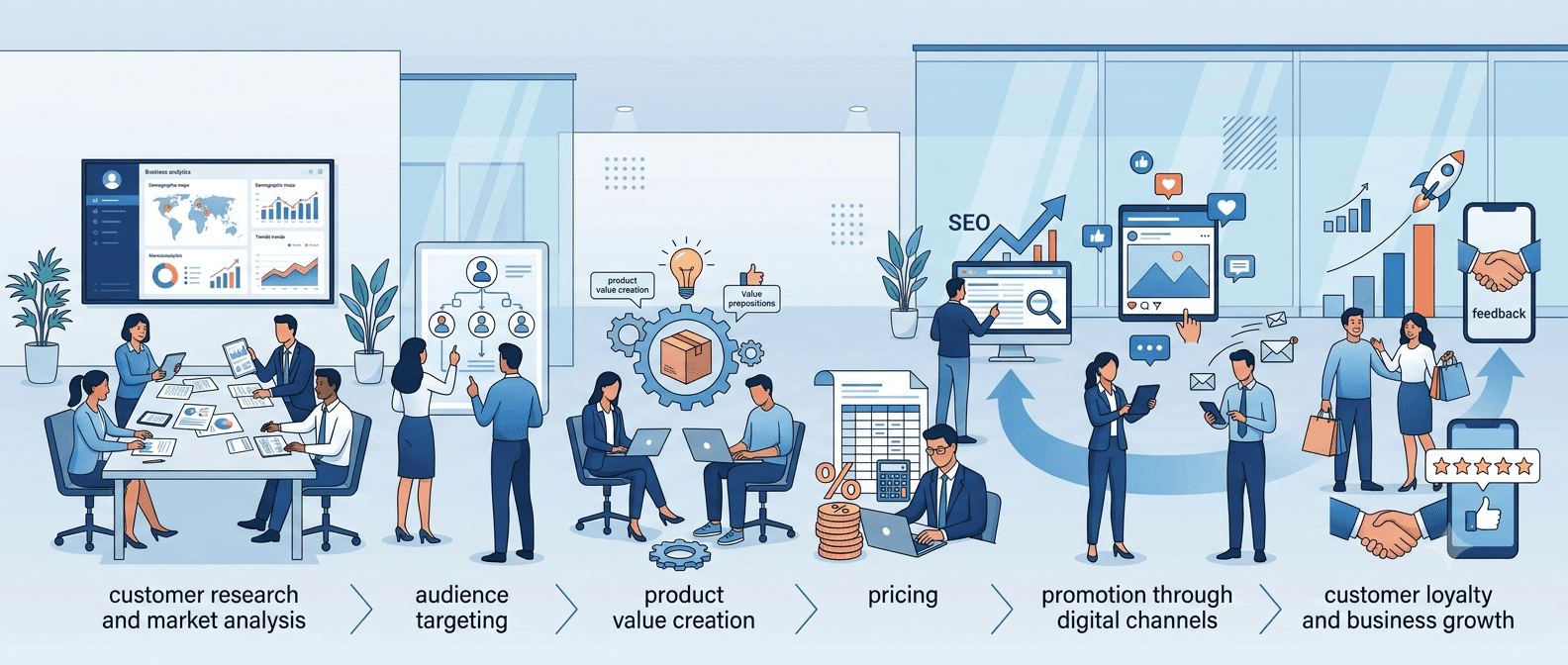
Marketing follows a clear, step-by-step process. Skip a step, and the whole effort tends to fall apart.
Research the Market
Every marketing effort begins with understanding the landscape. Who are the customers? What do they struggle with? What do competitors offer? Market research answers these questions through surveys, interviews, data analysis, and observation.
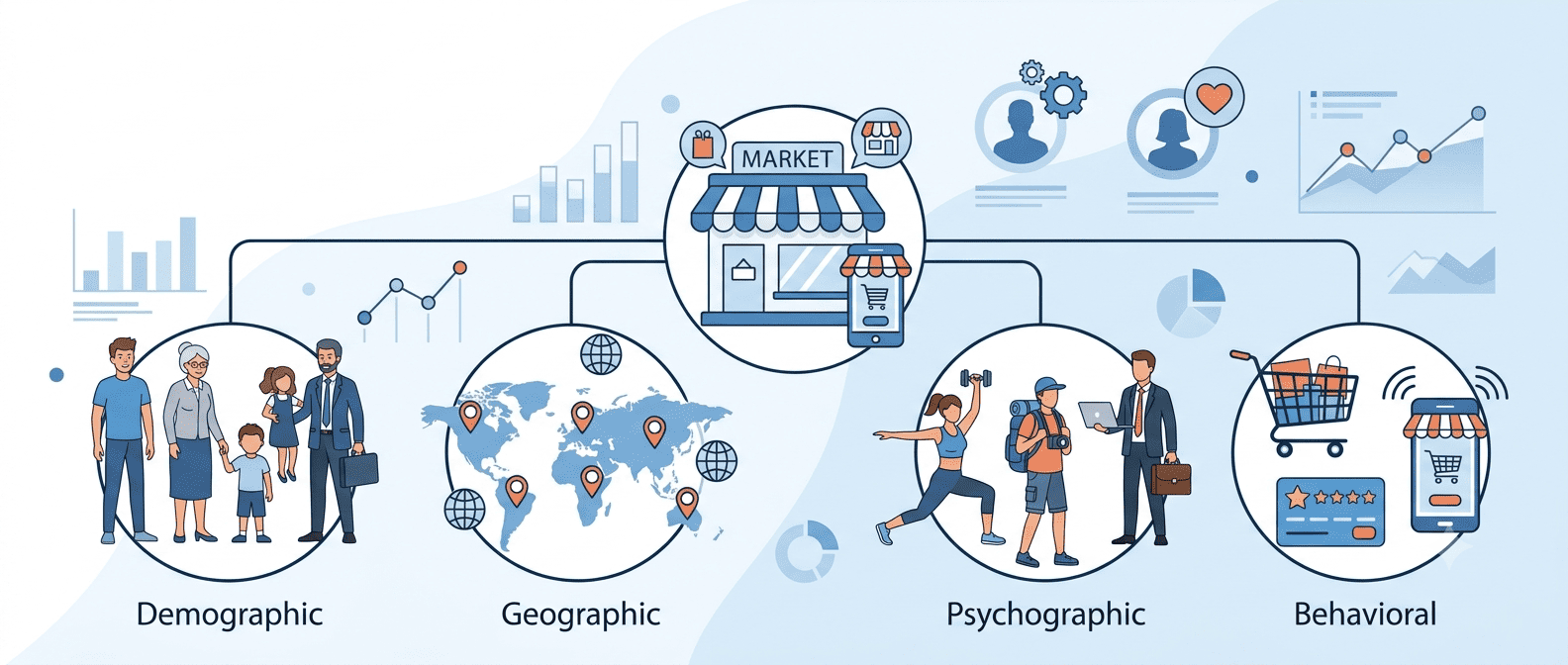
Identify the Target Audience
Not everyone is a potential customer. Effective marketing focuses on a specific group of people who are most likely to benefit from a product or service. This process, known as segmentation and targeting, ensures that resources go toward reaching the right people rather than everyone.
Create Value
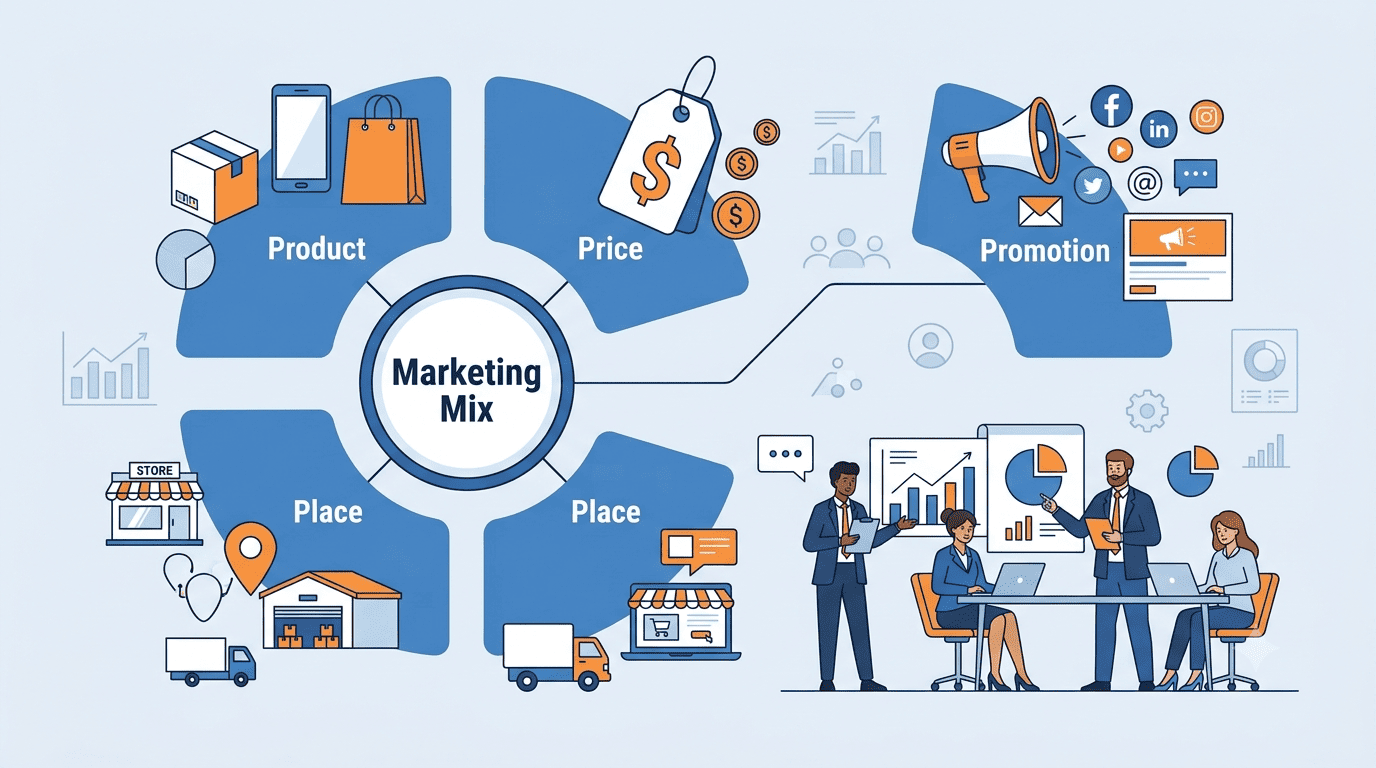
Value does not just mean a low price. It means giving customers something that solves a real problem or improves their life in some way. Businesses create value through product design, quality, convenience, and the overall experience they deliver.
Communicate the Value
Once the value exists, it needs to be communicated clearly. This is where advertising, content, campaigns, and messaging come into play. The goal is to help potential customers understand why this particular product or service is right for them.
Build Long-Term Relationships
The strongest marketing does not end at the first sale. Businesses that focus on keeping customers happy, gathering feedback, and delivering consistently earn loyalty. Loyal customers spend more and refer others, making them one of the most valuable outcomes of any marketing effort.
Types of Marketing
Digital Marketing
Digital marketing uses online channels to reach customers. This includes search engine optimization (SEO), paid search ads, email campaigns, and online display advertising. It allows for precise targeting and measurable results.
Content Marketing
Content marketing focuses on creating useful material such as blog posts, videos, guides, and infographics. The goal is to attract an audience by providing genuine value rather than pushing a direct sales message.
Social Media Marketing
Social media marketing builds a presence on platforms like Instagram, LinkedIn, Facebook, and TikTok. Businesses use organic posts and paid promotions to reach their target audience, spark conversation, and build community.
Email Marketing
Email remains one of the highest-return channels available. A well-structured email list allows businesses to communicate directly with people who have already shown interest, making it a powerful tool for nurturing leads and retaining customers.
Applied Analysis
Consider a local coffee shop that wants to grow. Using the marketing process, the owner starts by researching the neighborhood and identifying regulars who value quality over convenience. The target audience becomes young professionals looking for a calm workspace and specialty drinks.
The shop creates value by offering a curated menu with tasting notes and a reliable WiFi connection. They communicate that value through Instagram posts and a simple email newsletter. Over time, regulars bring friends, leave reviews, and become a community. That is marketing working as it should.
Advantages and Disadvantages
Advantages
Builds brand awareness: Consistent marketing puts a business in front of the right audience repeatedly, creating recognition and trust over time.
Drives sales growth: Effective campaigns attract new customers and encourage existing ones to buy again.
Provides useful data: Marketing activities generate insights about what customers want, which helps businesses make better decisions.
Creates competitive advantage: A company with stronger marketing can outperform rivals even when products are similar.
Disadvantages
Can be costly: Paid campaigns, agency fees, and content production add up quickly, especially for smaller businesses.
No guaranteed results: Marketing spend does not always translate into sales. Poor targeting or weak messaging can waste a budget.
Market saturation: When many businesses compete for the same audience, it becomes harder to stand out.
Time-intensive: Building brand recognition and organic reach takes consistent effort over months or years.
Common Mistakes
Skipping research: Launching campaigns without understanding the target audience leads to wasted spend and weak results.
Trying to reach everyone: Broad, unfocused messaging rarely connects with anyone. Specificity is more powerful than scale.
Measuring the wrong things: High follower counts and large email lists mean little if they do not convert. Focus on metrics tied to real business outcomes.
Treating marketing as a one-time event: Marketing requires consistency. A single campaign rarely builds lasting momentum.
Practical Tips
Start with a clear goal. Define what success looks like before spending anything.
Know your audience deeply. Talk to real customers, read their reviews, and understand their language.
Test before scaling. Run small experiments to find what works before committing a large budget.
Repurpose content. A single blog post can become social posts, an email, and a short video, stretching the value of one effort.
Track results regularly. Review performance data at least monthly and adjust based on what the numbers show.
Key Takeaways
Marketing is the process of identifying customer needs and delivering value profitably.
It follows a clear sequence: research, targeting, value creation, communication, and relationship building.
The main types include digital, content, social media, and email marketing.
The biggest benefits are brand awareness, sales growth, and competitive advantage.
The most common pitfalls are skipping research, targeting too broadly, and expecting instant results.
Put Your Marketing Knowledge to Work
Marketing is not a mystery. It is a structured process that any business, big or small, can learn and apply. The fundamentals stay the same regardless of the industry: understand your audience, create real value, communicate clearly, and show up consistently.
Start with one area. Choose the channel that best fits your audience. Set a clear goal. Measure what happens. Then build from there.